
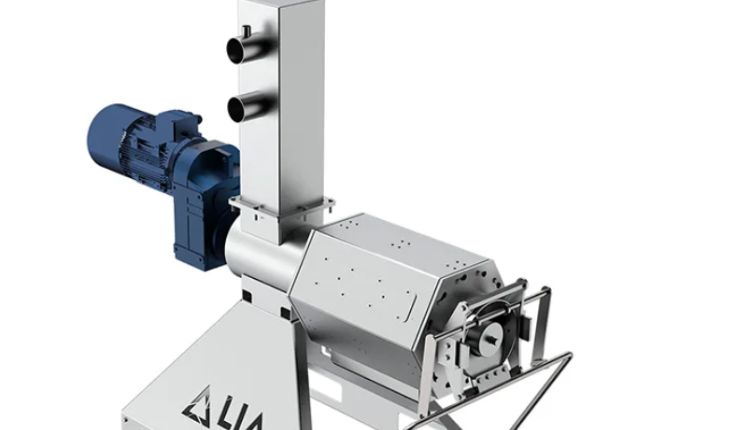
Efficient manure management is not limited to collection and transfer. One of the most important stages is preparing the material for storage, reuse, transport, or further treatment. When manure remains mostly liquid and homogeneous, direct handling can become more difficult for many farms and facilities. This is why solid-liquid separation is an essential part of modern manure processing. Lia Makine’s Manure Seperator system is designed to separate and dewater manure in a more controlled way, while also offering suitability for other waste-related applications beyond standard farm use.
The product page explains that mostly liquid manure obtained from the farm needs to be separated and dewatered. Lia Makine presents these separators as robust and durable machines available in different capacities depending on farm requirements. The same page also notes that, due to their solid construction and performance, these machines can be used for separating various waste materials in a variety of applications. This gives the product a wider industrial relevance beyond routine livestock handling.
The listed areas of use include livestock enterprises, biogas facilities, agriculture, food and industrial facilities, and environmental and wastewater management. This distribution clearly shows that the separator is not limited to one narrow farm scenario. It is relevant wherever liquid-heavy organic material must be divided into more manageable solid and liquid fractions, especially when the goal is improved storage, easier transport, or more efficient downstream use.
The technical details are centered on two models: Manure Seperator GS35 and HD Manure Seperator HDGS35. The GS35 offers a cattle manure capacity of 15~35 m³/h, uses a 304 chrome body, can be produced with sieve sizes between 0.3 mm and 1 mm, and delivers moisture content around 70%. The HDGS35 model is listed with cattle manure capacity of 10~25 m³/h, the same 304 chrome body structure, the same 0.3 mm to 1 mm sieve range, and approximately 65% moisture content.
These differences help clarify the role of each model. Operations looking for higher throughput may find the GS35 more appropriate, while businesses focused on a lower moisture result may prefer the HDGS35. The customizable sieve range also makes the machine more adaptable to different material characteristics, while the 304 chrome body supports long-term durability under demanding conditions. In real working environments, these are not minor details; they directly affect process control, wear resistance, and final output quality.
In broader operational terms, Manure Seperator systems reduce waste-handling complexity, support more manageable storage conditions, allow separate handling of liquid and solid fractions, and improve efficiency in later stages such as transport, field application, or biogas-related processing. For farms and facilities that want more control over manure output and a more professional waste treatment workflow, this product group offers a strong and durable solution.
